Every hour of the shift,
against the plan.

NeuroDash connects the FMS, the mine plans and the topography, and tells each manager how many tonnes are being lost, on which road segment and who owns it. AI built by miners, proven at Codelco.

Shift A · 11:42 Material moved 41.2 kt plan 52.0 Haul truck speed 17.6 km/h plan 22.5 Ramp F6 9.6 km/h bottleneck: road condition Crusher 21.4 kt on pace Safe close 63.8 kt weekly plan 104.1 Shift A · 11:42 Material moved 41.2 kt plan 52.0 Haul truck speed 17.6 km/h plan 22.5 Ramp F6 9.6 km/h bottleneck: road condition Crusher 21.4 kt on pace Safe close 63.8 kt weekly plan 104.1
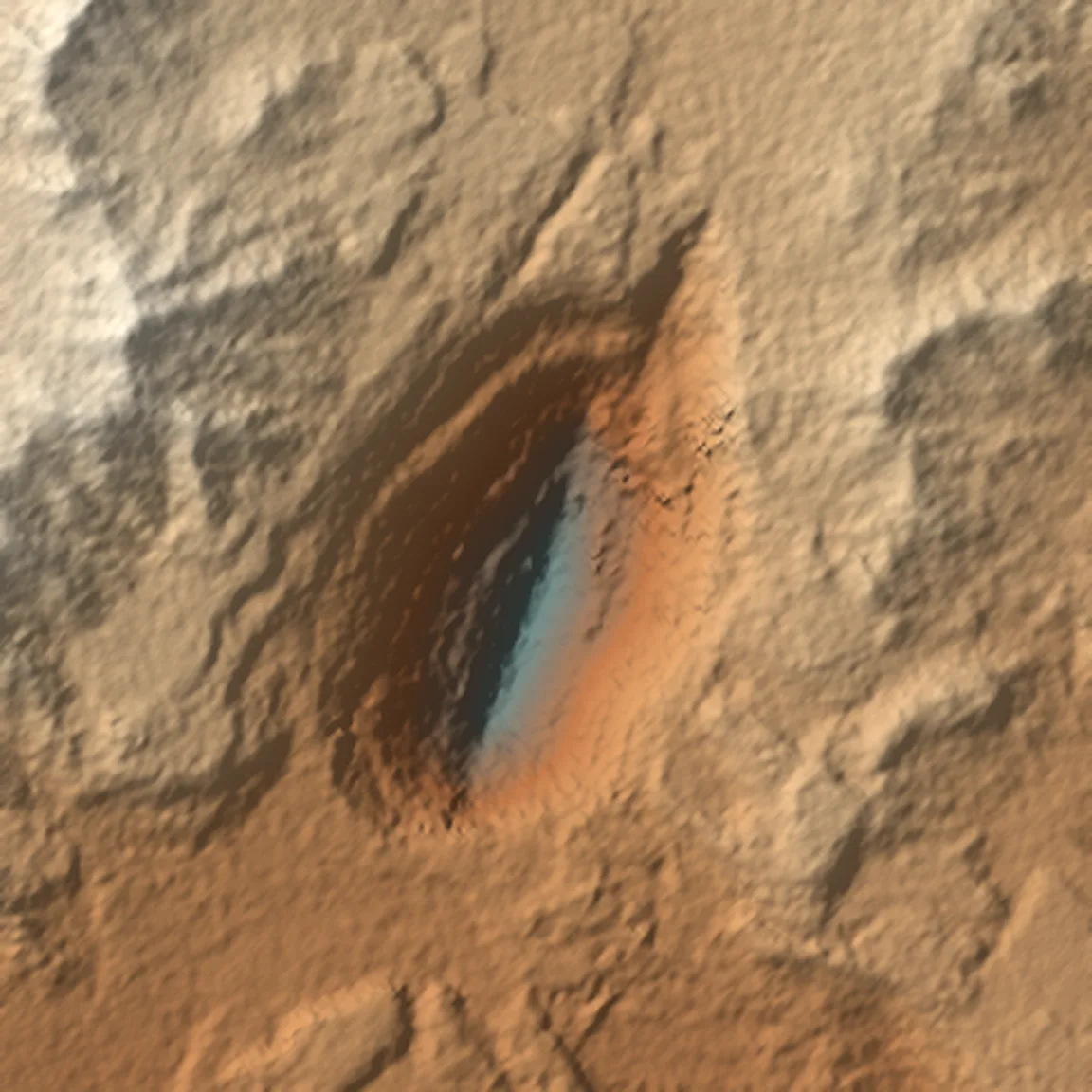
Real relief of an open pit in northern Chile, colored by elevation
Real topography

On the terrain, not on a drawing.

A real open pit in northern Chile, its relief measured by satellite. On top of it, NeuroDash draws every ramp segment against plan speed.

Scroll to walk through the shift ↓

08:00 · First hour

The shift starts at the crusher, not in the change room.

Time to first load, trucks left far from where they are needed, and reassignments. NeuroFleet proposes who starts, on which truck and to which shovel.

13:00 · Meal break

Keep tonnes from dropping to zero.

Staggered breaks, with relief operators taking over the trucks of those who take longest. Time at the canteen is measured for every truck.

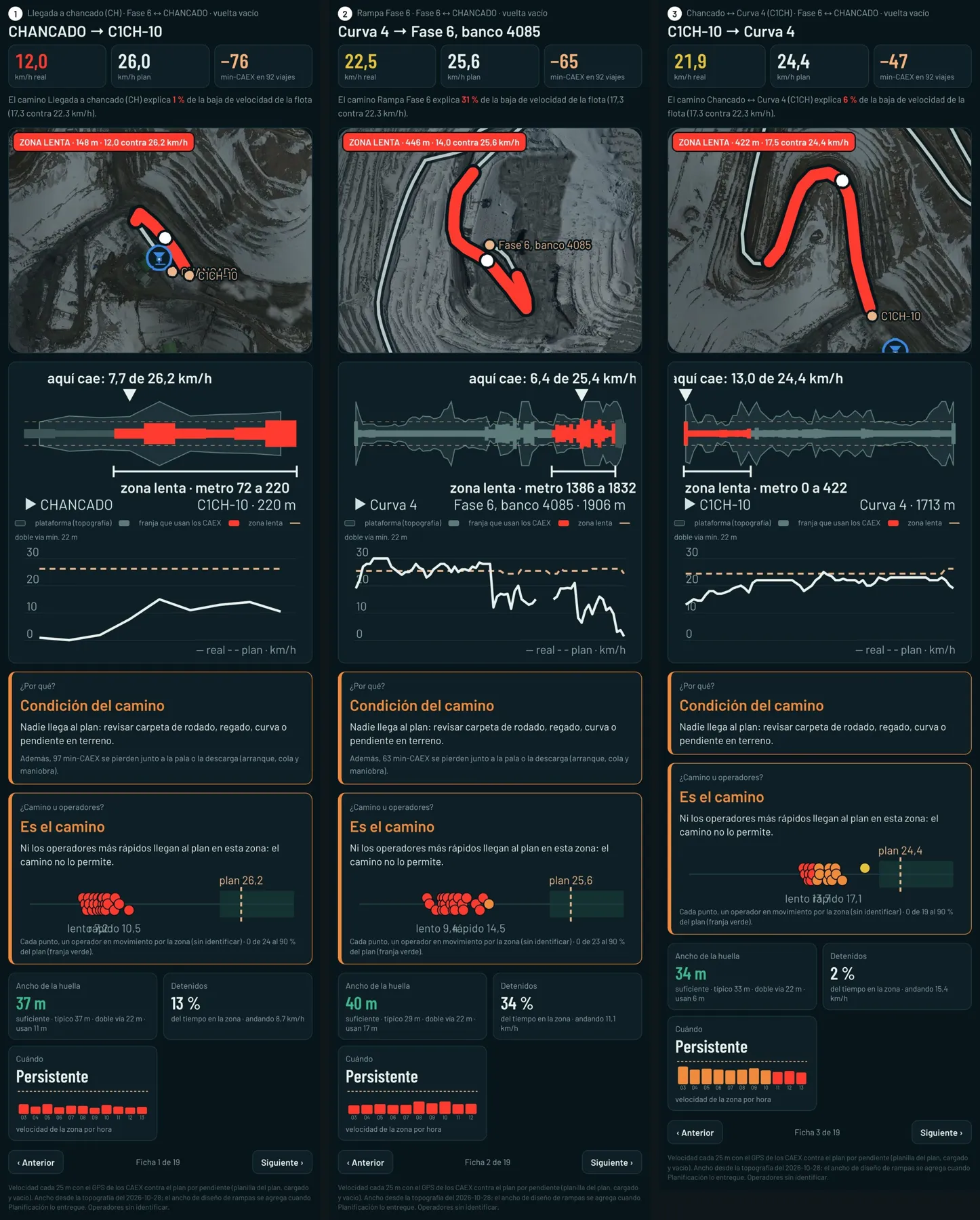
On the road · Slow segments

Every road segment, against plan speed.

If even the fastest operators cannot reach plan speed, it is the road: it goes to Mine Services with the exact location. If others can, it is an operations issue.

20:00 · Close

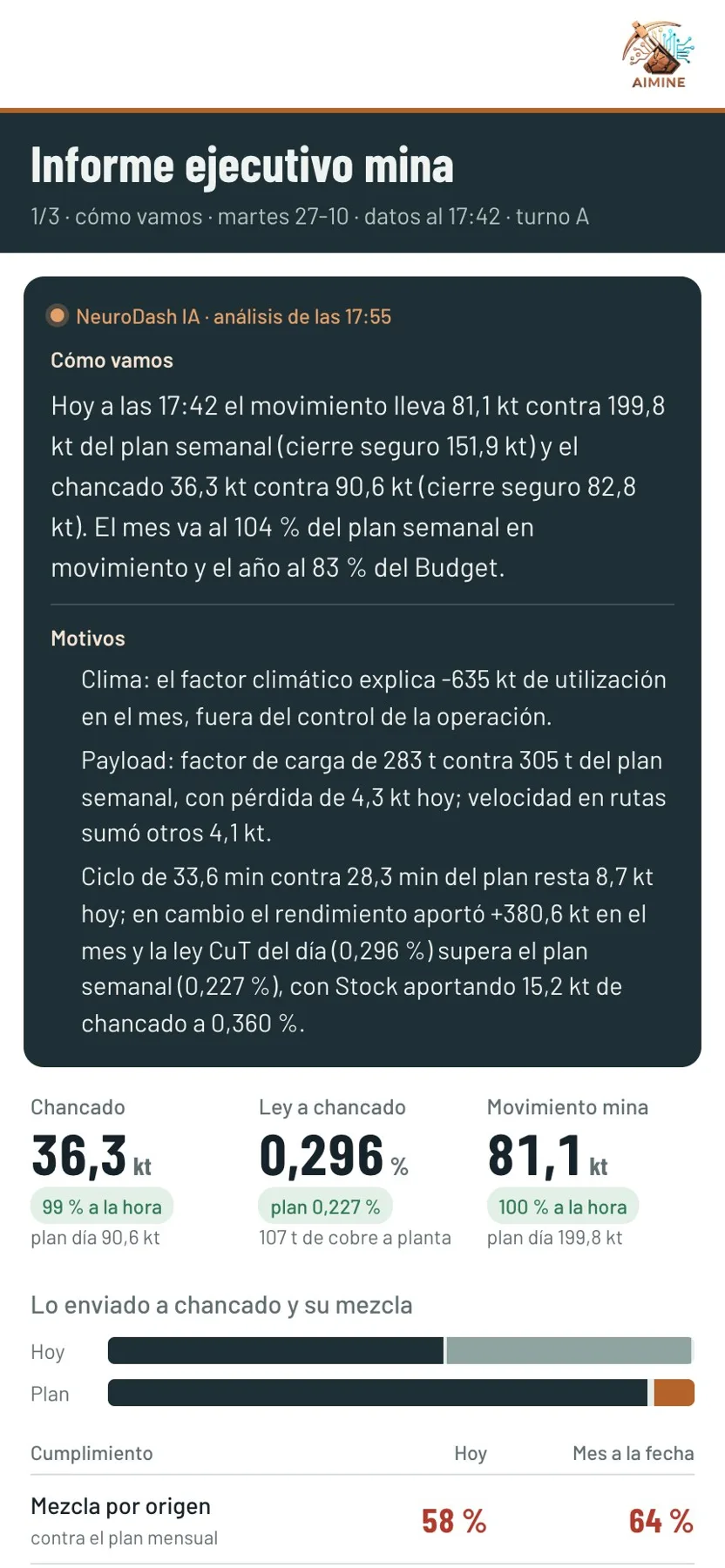
The closed shift, on every manager's phone.

Plan versus actual, what was lost and who owns it: hourly to mine management and every two hours to each superintendent.

Book a demo

Relief: SRTM (NASA) via AWS Terrain Tiles · illustrative shift figures
Validation
TRL 9in production at Codelco Salvador Division
Validated compliance
102.6%of plan during the validation period
In operation
24/7control room of an open-pit copper mine, Chile
Team
25+ yearsin dispatch and mine operations

A shift is lost in three moments.

Every shift supervisor knows it: the first hour, the meal break and the last hour are the ones that fall. NeuroDash measures them hour by hour against the plan, and NeuroFleet proposes who drives which truck on which route to recover them.

  • 08:00First hour. Time to first load, reassignments, and trucks the previous shift left far from where they are needed.
  • 13:00Meal break. Staggered breaks with relief operators, so tonnes do not drop to zero while the regular operator eats.
  • 19:00Last hour. The best operators on each route at the close, and the shift change at the right place.
Tonnes per hour across a 12-hour shift against plan: drops at hour 1, at hours 5 and 6 (meal break) and at hour 12. plan 1612 t per hour · 12-hour shift
The shift's “seagull” curve, as shown on the control room video wall.

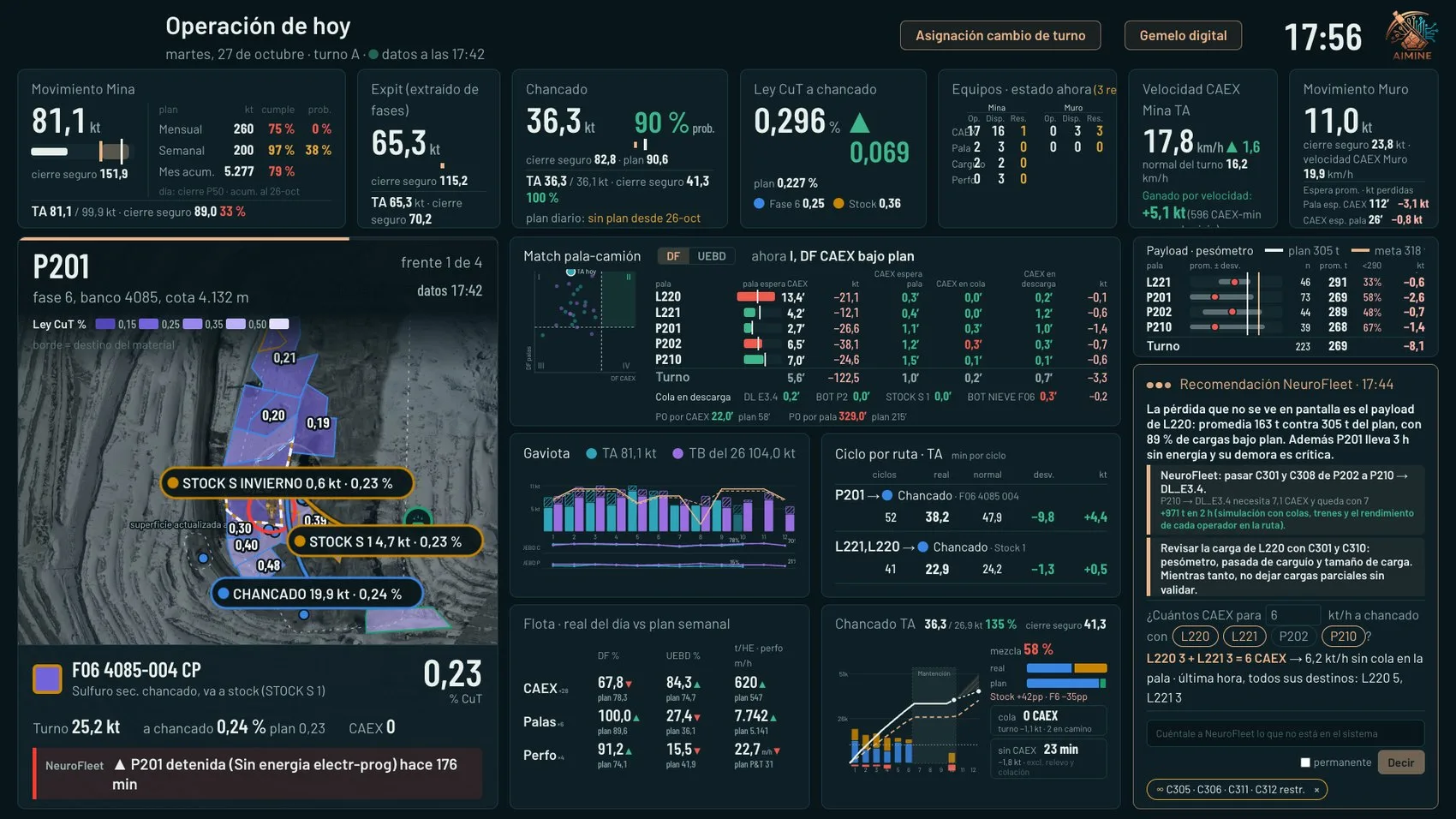
What operations sees today.

Real screens in production, with the mine's and people's names hidden.

Control room video wall with plan versus actual, digital twin of the face and shovel–truck match
Control room video wall: plan versus actual for the day, week and month, the digital twin of the active face, shovel–truck match and the NeuroFleet recommendation.

It reaches whoever has to answer for it.

Management is held accountable for what the wall shows. NeuroDash gives each person their part, on their phone, with every deviation named.

  • HourlyMine management: how the shift is going, likely close and what was lost.
  • Every 2 hoursEach superintendent: operations, mine services, drill & blast, with their shovels, trucks and road segments.
  • Three times a dayExecutive leadership: mine report against the plan.
  • Every MondayWeekly summary against the weekly and monthly plans.

How it works.

The mine's data

  • FMS and dispatch reports
  • Monthly, weekly and daily plans
  • Topography and block model
  • Maintenance

NeuroDash, inside the mine network

  • Read-only
  • Every number verified against its source
  • The mine's own definitions: utilization, availability, official speed
  • Automatic audit every day

The people who decide

  • Control room video wall
  • Chat on desktop and phone
  • WhatsApp to management and superintendents
  • Reports in Word, PowerPoint and Excel

Everything is a proposal

NeuroDash never sends orders to the dispatch system. It recommends; people decide.

Measured against real operations

Every improvement is measured against the same shifts without NeuroDash, week by week, before it is claimed.

No people rankings on screen

Screens show the assignment. Individual performance stays in internal reports.

Installed at the mine

It runs inside the mine network, without relying on a VPN or the cloud to operate.

From geology to the plant.

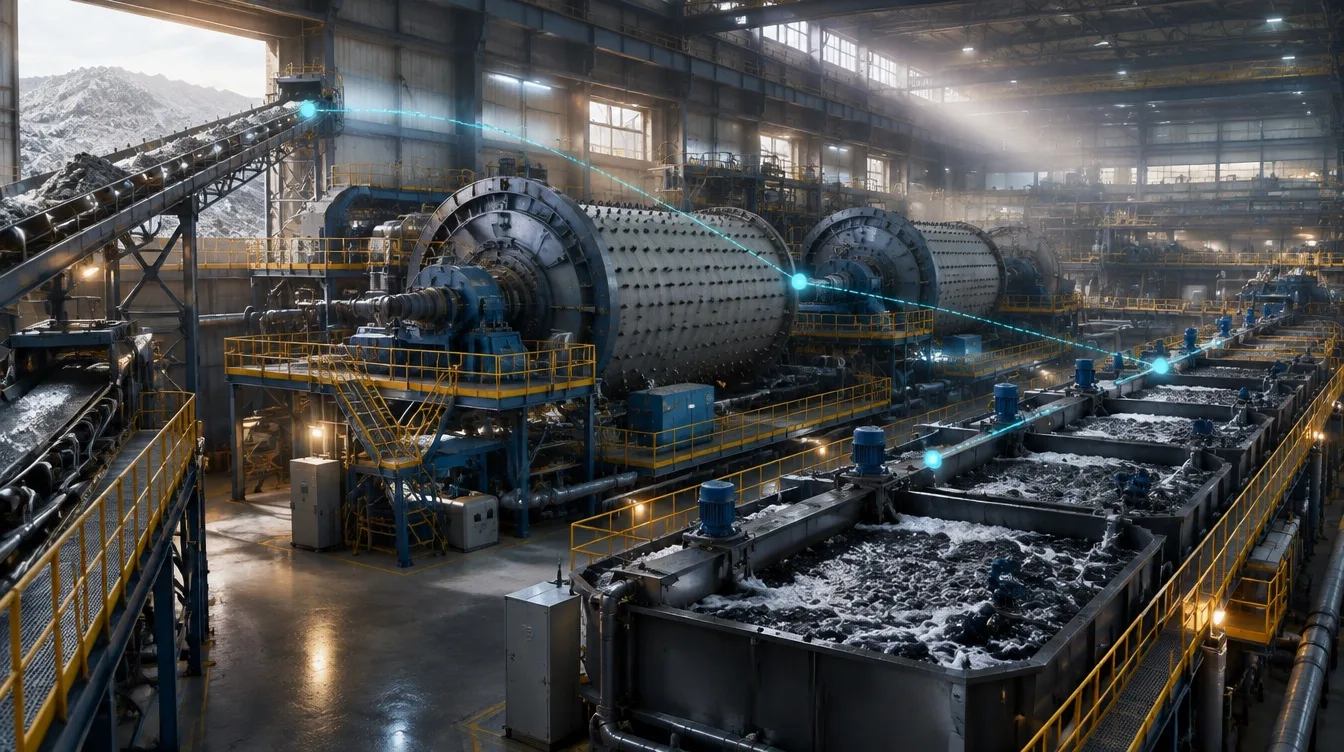
The next step is Mine to Mill: linking planning and the block model (grade and hardness) with the mine, maintenance and the concentrator, on the same data. What is decided at the shovel shows up in the concentrate.

Let's discuss your case
Grinding mills in a copper concentrator

Miners who master technology.

We are not a software company trying to understand mining. We come from the pit and the dispatch room, and we build what we would have wanted on shift.

David Kubota

David Kubota

CTO and co-founder

25+ years in mine operations (Codelco, Centinela, FMG Australia). Specialist in dispatch and operational technology. MIT AI Strategy Program.

Jessica Almeyda Ojeda

Jessica Almeyda Ojeda

CEO and co-founder

Strategic leadership and business development. Expert in mining industry relations.

Let's look at your operation with your data.

In the demo we use your mine's real data: where the shift is lost, what it is worth and who can recover it.

AIMINE assistant